Philadelphia Lead Paint Compliance Guide
A step-by-step compliance reference for Philadelphia landlords renting pre-1978 units — covering the city's Lead-Safe/Lead-Free certification law and the federal Title X disclosure rule.
If you own a Philadelphia rental built before 1978, lead paint compliance isn't optional — it's the law. This interactive guide walks through everything you need to know, step by step.
Why this exists
Philadelphia has one of the oldest housing stocks of any large U.S. city, and lead-based residential paint was not banned nationally until 1978. Any Philadelphia rental unit built before that year is presumed to contain lead paint until proven otherwise, and both the city and federal government regulate how landlords must disclose, test for, and remediate that risk before renting the unit to a tenant.
This guide summarizes the two overlapping legal regimes that apply to a Philadelphia landlord renting a pre-1978 property: the federal Lead-Based Paint Disclosure Rule (Title X) and the Philadelphia Lead Paint Disclosure and Certification Law (Philadelphia Code Chapter 6-800). It is written as a practical compliance reference, not as legal advice.
Who this applies to
- Any Philadelphia rental unit in a building constructed before 1978 (city law) — regardless of whether a child lives there.
- Any pre-1978 housing anywhere in the U.S. being sold or leased (federal law), with narrow exceptions.
- Exempt: units built after 1977, college dormitories, and (for the federal rule only) leases of 100 days or less and units already tested lead-free.
The two-minute summary
- Every pre-1978 Philadelphia rental unit must have a current Lead-Free or Lead-Safe certificate before you sign or renew a lease, and before you get or renew your rental license.
- Lead-Safe certificates are good for 48 months (4 years); Lead-Free certificates never expire.
- Only a PA-licensed lead inspector/risk assessor, or (for Lead-Safe only) an EPA-certified lead dust sampling technician, may perform the testing.
- You must give the tenant the signed certificate, the EPA lead pamphlet, and a written advisory — and file a copy of the certificate with the Philadelphia Department of Public Health.
- Separately, federal law requires a Lead Warning Statement in every pre-1978 lease and disclosure of any known hazards — this applies even where the Philadelphia certification requirement doesn't.
- Non-compliance risk includes fines of up to $2,000 per day under city law, denial/loss of your rental license, and tenant lawsuits for rent abatement, damages, and attorney's fees.
Two legal frameworks, working together
A common point of confusion: the federal rule and the Philadelphia rule are not the same law and don't require the same things. Philadelphia's law is stricter — it requires actual testing and certification, not just disclosure. Both apply at the same time to a Philadelphia lease of pre-1978 housing.
| Federal — Title X Disclosure Rule | Philadelphia — Code Ch. 6-800 | |
|---|---|---|
| Authority | Residential Lead-Based Paint Hazard Reduction Act of 1992 (Title X); 40 C.F.R. Part 745, Subpart F; enforced by EPA/HUD. | Philadelphia Code Sec. 6-800 / 6-803, enforced by the Dept. of Public Health. |
| Applies to | Sale or lease of nearly all pre-1978 housing nationwide. | Lease (new or renewed) and rental licensing of pre-1978 rental units in Philadelphia. |
| Core obligation | Disclose known lead hazards, give EPA pamphlet, include Lead Warning Statement in the lease. Does not require testing. | Actually test the unit and obtain a Lead-Free or Lead-Safe certificate before signing/renewing a lease or rental license. |
| Penalties | Treble (3×) damages, civil penalties up to ~$49,800/violation/day, possible criminal penalties. | Up to $2,000 per offense (each day separate), loss/denial of rental license, tenant rent abatement + attorney's fees. |
Federal requirement: the Lead-Based Paint Disclosure Rule (Title X)
Established by the Residential Lead-Based Paint Hazard Reduction Act of 1992 and implemented at 40 C.F.R. Part 745, this rule applies to nearly all pre-1978 housing sales and leases nationwide, including Philadelphia. It is a disclosure requirement — it does not require testing or remediation on its own.
Before a lease is signed, the landlord (or agent) must:
- Give the tenant a copy of the EPA/HUD pamphlet Protect Your Family from Lead in Your Home.
- Disclose any known information about lead-based paint or lead-based paint hazards in the unit, including records from prior inspections.
- Provide any available records and reports on lead-based paint, including building-wide evaluations in multi-unit buildings.
- Include a signed Lead Warning Statement in the lease itself (as an attachment or built into the lease language).
- Keep signed copies of all disclosures for 3 years after the lease begins.
Not covered by the federal rule:
- Housing built after 1977.
- Zero-bedroom units (studios, dorms) unless a child under 6 lives there.
- Leases of 100 days or less (e.g., short-term/vacation rentals).
- Housing exclusively for elderly or disabled residents, unless a child under 6 lives there.
- Units already tested and documented as lead-free.
- Foreclosure sales.
Note: The 10-day pre-purchase inspection opportunity under this rule applies to home buyers, not renters. Violations can trigger triple damages, TSCA civil penalties (inflation-adjusted annually — roughly $49,800 per violation per day as of the 2025 adjustment), and potential criminal liability.
Philadelphia requirement: Lead Paint Disclosure and Certification Law
Philadelphia Code Chapter 6-800 (especially Sec. 6-803) goes further than federal law: it requires the landlord to actually have the unit tested and certified as Lead-Free or Lead-Safe, not merely disclose what is known. The law was enacted in 2011 (effective December 2012), substantially expanded by Bill No. 180936 in 2019, and phased in citywide by zip code between October 2020 and 2022. As of today, it applies to every pre-1978 rental unit in Philadelphia, regardless of whether children live there.
When certification is required
- Before signing a new lease for a pre-1978 unit.
- Before renewing an existing lease (unless the prior certification is still within its validity period).
- Before obtaining or renewing the rental license from Licenses and Inspections.
Exemptions
- Properties constructed entirely after 1977 (must still file a Statement/Certificate of Exemption with proof of construction date — exemption is not automatic).
- College dormitories.
There is no exemption for "no children live here" — that exemption was eliminated citywide as the law phased in through 2022.
Lead-Free vs. Lead-Safe certification
| Lead-Free Certificate | Lead-Safe Certificate | |
|---|---|---|
| What it means | No lead-based paint anywhere in the unit (XRF reading below 0.7 mg/cm² / 1.0% by weight). | Lead paint may be present, but no deteriorated paint and dust-wipe samples test below EPA hazard levels. |
| Testing method | XRF (X-ray fluorescence) survey of all painted surfaces, common areas included. | Visual inspection for deteriorated paint, plus dust-wipe sampling of each bedroom and the common room, lab-tested by an NLLAP-accredited lab. |
| Who can perform it | PA-licensed lead inspector / risk assessor only. | PA-licensed lead inspector / risk assessor, or an EPA-certified lead dust sampling technician. |
| Validity | Indefinite — does not expire. | 48 months (4 years) from inspection; re-testing required after. |
| Typical use | Higher upfront cost; chosen for fully abated units where owners want a permanent certificate. | Lower cost, most common; requires recurring re-certification every 4 years and after any paint disturbance. |
The inspection and testing process
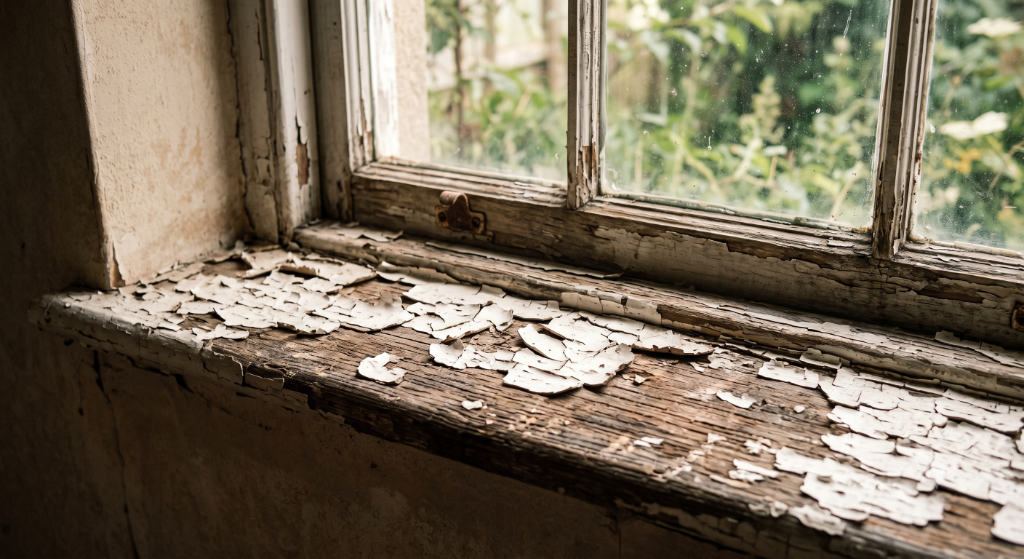
- Visual inspection: the certified professional inspects all painted surfaces — windowsills, baseboards, doorframes, trim, walls — in each bedroom and in the main common room, looking for deteriorated paint (cracking, scaling, peeling, chipping, or visible dust/debris).
- Dust-wipe sampling (Lead-Safe path): one windowsill sample and one floor sample are taken from each bedroom and from the common room, plus a blank control sample. Samples go to an NLLAP-accredited lab, typically with results in 2–3 business days.
- XRF survey (Lead-Free path): a licensed inspector/risk assessor uses an XRF device to test all interior and common-area surfaces for lead content.
- If the unit fails visual inspection or dust-wipe clearance: it must be remediated (typically wet-sanding and repainting deteriorated surfaces) by an EPA RRP-certified contractor before a tenant can move in, then re-tested.
- Once the unit passes, the inspector/technician completes, signs, and dates the Lead-Safe or Lead-Free Certificate.
Certificate delivery & filing
After a passing inspection, you must:
- Provide the tenant with a signed copy of the certificate, the EPA lead pamphlet, and a written advisory about lead hazards.
- File a copy of the certificate with the Philadelphia Department of Public Health.
- Keep records on hand — Lead-Safe certificates must be renewed every 4 years and after any paint disturbance; Lead-Free certificates are permanent.
Penalties for non-compliance
- City: up to $2,000 per day per offense, plus denial/loss of your rental license and tenant rent abatement/refund with attorney's fees.
- Federal: treble (3×) damages and TSCA civil penalties up to roughly $49,800 per violation per day (adjusted annually), plus possible criminal liability.
- Private suits: tenants can sue for rent abatement, damages, and attorney's fees, and retaliation for exercising these rights is prohibited.
Your compliance checklist
Use this interactive checklist to track your obligations. Tap each item as you complete it.
- Confirm the unit was built before 1978 (check property records / OPA).
- If built after 1977, file a Statement of Exemption with proof of construction date.
- Hire a PA-licensed lead inspector/risk assessor (or EPA-certified dust sampling technician for Lead-Safe).
- Complete visual inspection of all painted surfaces in each bedroom and common room.
- Complete dust-wipe sampling (Lead-Safe) or XRF survey (Lead-Free).
- Remediate any failures using an EPA RRP-certified contractor, then re-test.
- Obtain the signed Lead-Safe or Lead-Free Certificate.
- Give the tenant: signed certificate + EPA pamphlet + written advisory.
- File a copy of the certificate with the Philadelphia Dept. of Public Health.
- Include a Lead Warning Statement in the lease (federal Title X requirement).
- Disclose any known lead hazards and provide prior inspection reports to the tenant.
- Keep all signed disclosure records for 3 years.
- Set a reminder to re-certify Lead-Safe units every 4 years (and after any paint disturbance).
Sources & disclaimer
This guide covers the Philadelphia Lead Paint Disclosure and Certification Law (Phila. Code Sec. 6-800 / 6-803) and the federal Lead-Based Paint Disclosure Rule (Title X, 40 C.F.R. Part 745, Subpart F). It was prepared in July 2026 and reflects the law as understood at that time.
This guide is for informational purposes only and is not legal advice. Requirements change — verify current obligations with the Philadelphia Department of Public Health and a qualified attorney before relying on this material.
Need a certified lead inspector or RRP-certified contractor? Request a Pro and we'll match you with vetted Philadelphia professionals.