HUD Immigration Verification
HUD is enforcing existing immigration verification rules more aggressively. PHA is required to re-check tenant eligibility. Some tenants may lose or have reduced assistance.
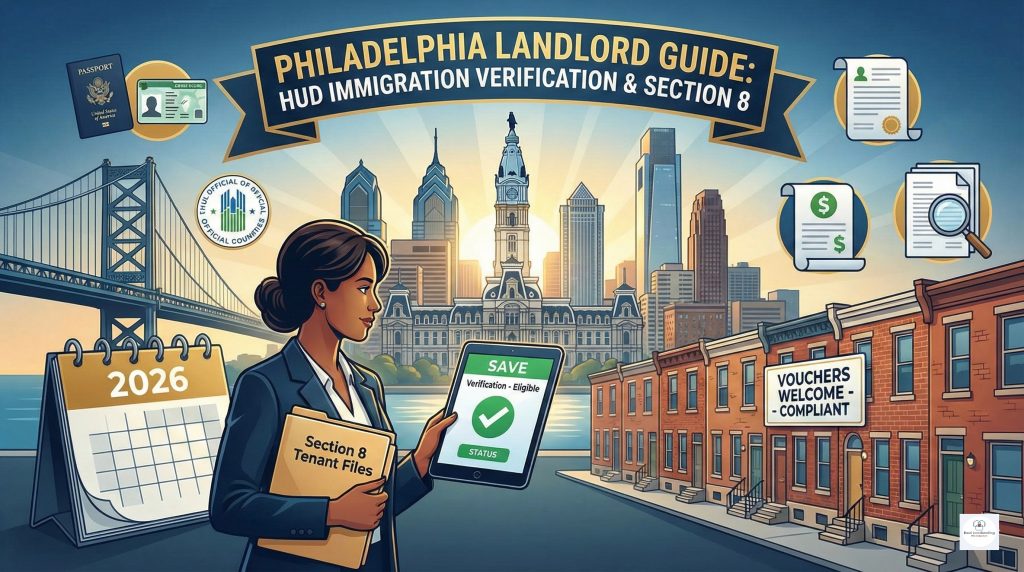
HUD Immigration Verification and Section 8: What Philadelphia Landlords Need to Know in 2026
In 2026, the U.S. Department of Housing and Urban Development (HUD) began enforcing stricter immigration status verification for tenants receiving housing assistance.
For Philadelphia landlords who participate in the Section 8 Housing Choice Voucher program, this change can affect rent payments, tenant eligibility, and administrative processes.
Why HUD Is Increasing Immigration Status Enforcement
HUD recently directed housing authorities to re-verify tenant eligibility using federal immigration databases. This followed a national audit that identified widespread reporting and eligibility issues. As a result, agencies must now demonstrate compliance or risk losing federal funding.
In Philadelphia, these requirements are implemented by the Philadelphia Housing Authority (PHA).
Which Philadelphia Landlords Are Affected?
These rules apply only to HUD-subsidized housing programs, including:
- Section 8 Housing Choice Vouchers
- Project-Based Section 8
- Public Housing
Landlords who rent exclusively at market rates are not affected. If you accept housing vouchers in Philadelphia, these changes apply to you.
How Immigration Status Is Evaluated for Section 8 Tenants
HUD regulations allow certain non-citizens to qualify for housing assistance, including:
- Lawful permanent residents (green card holders)
- Refugees and asylees
- Temporary Protected Status (TPS) holders
- Other federally recognized categories
Verification is handled by PHA, not by landlords.
Key Scenarios
Scenario 1: Tenant Has Verified Eligible Status — Voucher assistance continues, HAP payments remain active, recertification may take longer. Impact on landlords: Minor administrative delays with limited financial risk.
Scenario 2: Mixed-Status Households and Prorated Assistance — Many Philadelphia Section 8 households include both eligible and ineligible members. HUD allows prorated assistance, resulting in reduced subsidy, increased tenant portion, unchanged contract rent. Impact on landlords: Higher risk of late or partial payments.
Scenario 3: Loss of Eligibility or Failure to Verify — Payments may be suspended, voucher assistance can be terminated, HAP stops. Tenants are provided notice and appeal rights before termination. Impact on landlords: Immediate income disruption and potential vacancy.
Key Takeaways
- HUD is enforcing existing immigration verification rules more aggressively
- PHA is required to re-check tenant eligibility
- Some tenants may lose or have reduced assistance
- Payment delays and turnover may increase
- Preparation and documentation are critical
Understanding these rules now helps landlords minimize risk.